Hours Tracker Time Tracking
- 3.6
- Rating
- 1.00M
- Installs
- Free
- Price
 Analysis by App-foxy
Keeping track of paid time sounds simple until a week fills up with changing shifts, short breaks, travel between jobs, and last-minute schedule changes. I have often found that the real problem is not forgetting that I worked, but forgetting exactly when I started, when I stopped, and which hourly rate belonged to that particular job. Hours Tracker Time Tracking, a business app from cribasoft, LLC, is built around removing that repeated mental bookkeeping.
After using it as a work log, I see its main value in the small moments between tasks. Instead of trying to reconstruct a week from memory, I can record time while it is happening and check the running result later. That makes it useful for hourly employees, contractors, freelancers, and anyone who needs a clearer connection between hours worked and expected pay. The strongest reason to use it is not complicated reporting; it is reducing the number of details you have to remember.
The app is free to install and is rated for Everyone, which makes it approachable for a broad range of workers. It has been available since June 23, 2013, and its current version is 5.0.14. That long presence matters to me because a time log is only useful when I feel comfortable returning to it repeatedly, not when it looks impressive for one afternoon.
You May Also Like

 Blood Strike: 2.5 Anniversary
Blood Strike’s Loadouts Turn Every Drop Into a Tactical Gamble
A close look at Blood Strike’s custom loadouts: how fast access to signature weapons reshapes its battle royale rhythm, rewards preparation, and narrows the gap between fights.

 Pandora - Music & Podcasts
Pandora’s Music Is Easy to Start, but Harder to Recover
Pandora’s strength is its low-effort path from a seed to a station. Its weak spot is how much confidence it asks you to place in connection, setup, and quiet recovery.

 8 Ball Pool
 Is Built on Rivalries, Rematches, and Routine
A close look at the rivalries, rematches, shared routines, and unanswered safety questions that turn a quick pool match into a persistent mobile community.

 Samsung Music
’s Quiet Strength Is Playing What You Already Own
Its reach comes less from spectacle than from dependable access to a personal library. That simplicity is both the app’s strongest retention engine and its ceiling.

 AccuWeather: Weather Radar
AccuWeather Review: A Quick, Clear Forecast for Everyday Decisions
For everyday plans, the best forecast is the one you can understand quickly. AccuWeather makes rain timing, radar, and local conditions easy to act on, with a few trade-offs.

 Hill Climb Racing
Why Hill Climb Racing Still Turns Crashes Into One More Run
A tiny car, a bumpy hill and one more upgrade: Hill Climb Racing keeps resurfacing because its simple chaos makes every near-miss feel personal.
More From Our News Desk



Turning a messy workday into a usable record
Before I rely on any time tracker, I want to know what role it plays in my work life: a personal cross-check, not necessarily an official payroll record. In the next section, I look at the choices a user can make while keeping entries useful, then consider why those choices matter when a record may affect pay or invoicing.
The first setup should match the way you actually get paid
The most important early decision is how you define your work. A person with one employer and one hourly rate can keep things fairly direct. A freelancer handling several clients needs a more deliberate structure, because mixing every session into one undifferentiated total makes the final record harder to trust. I would set up the app around the jobs or work arrangements that I need to distinguish later, rather than treating every workday as identical.
This is also where I would slow down and check the hourly amount before entering a full week. A small setup mistake can affect every later pay estimate. If I switch between a regular role and contract work, I would avoid relying on memory and review each entry as soon as I finish it. That habit takes seconds and is much less frustrating than correcting several days at once.
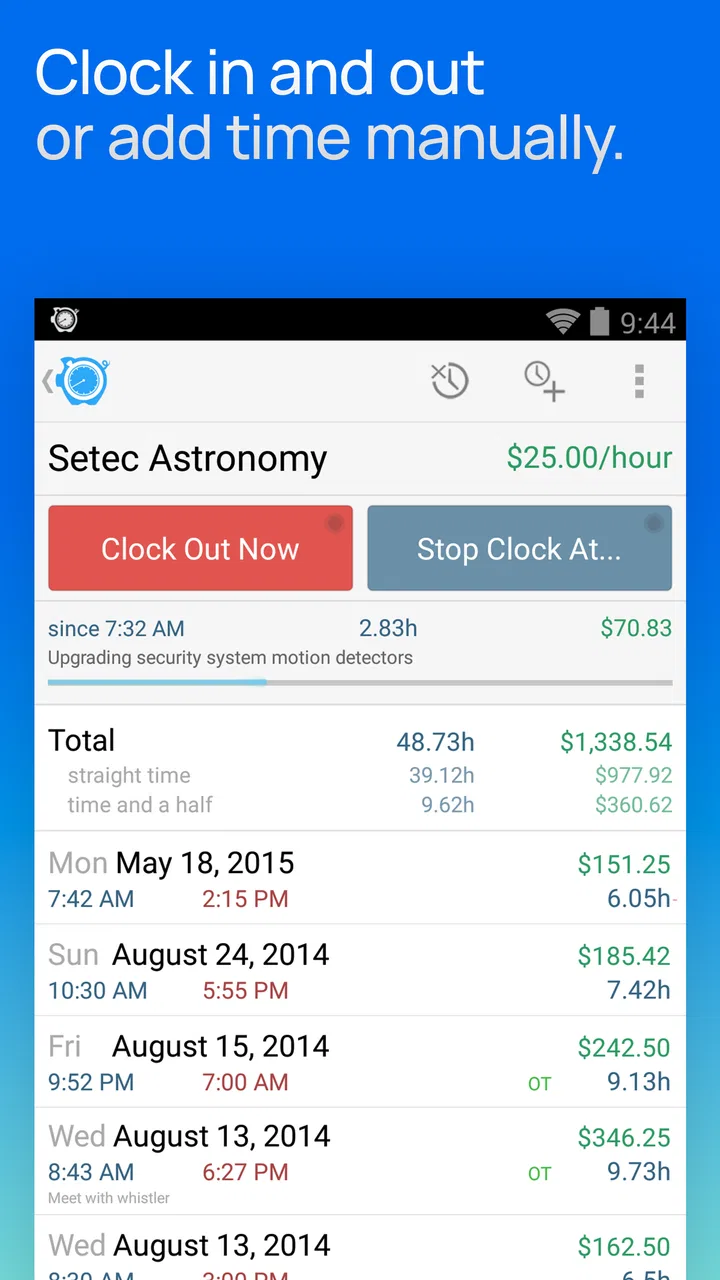
One useful approach is to use the app as a live notebook rather than a weekly calculator. I start a record when work begins, stop it when work ends, and make a quick adjustment when a break or interruption changes the real total. This workflow is particularly helpful for people whose days do not follow a clean office schedule. It also exposes an important trade-off: the app can organize the information I give it, but it cannot repair an entry that I never made or a rate that I entered incorrectly.
A practical routine for the first week
During the first few days, I would not try to create a perfect historical archive. I would focus on learning a repeatable routine. Before starting work, I check that I am recording the correct job. At the end, I stop the session and look at the result while the day is still fresh. If something unusual happened, such as an unpaid break or a short return to work later, I correct it immediately instead of assuming I will remember it on Friday.
That routine offers a less obvious benefit: it separates the act of working from the act of calculating. When I manually total hours in a notes app or spreadsheet, I am doing both at once, which creates opportunities for missed rows and arithmetic mistakes. Here, the time record becomes the source, while the pay view becomes a check against it. I still review the result, but I spend less energy building the calculation from scratch.
People often ask whether an app like this is suitable for irregular schedules. In my experience, yes, provided the user is willing to record each work period separately. It is better suited to several clearly logged sessions than to one vague entry covering an entire day. That distinction is important for split shifts, freelance projects, and jobs where a person leaves and returns later.
Where it fits in a normal workday
Imagine a contractor who spends the morning on one client, takes an unpaid lunch, and handles a different client in the afternoon. A paper notebook can capture that arrangement, but the contractor still has to turn it into totals and pay later. A general notes app can store timestamps, but it usually leaves the arithmetic and organization to the user. With Hours Tracker Time Tracking, I can treat each work period as a separate piece of the day and review the resulting totals without rebuilding the entire week.
For an hourly employee, the pattern is even simpler. I would begin a shift, stop it at the end, and use the accumulated record to check whether the expected pay matches the hours actually worked. If a manager or payroll system shows a different figure, the app gives me a personal record to compare rather than forcing me to rely on a vague recollection.
For a freelancer, the more valuable scenario is often not the daily total but the boundary between clients. A long workday can feel productive while still being difficult to invoice accurately. Recording client-specific sessions makes it easier to see where time went and whether a project is taking more effort than expected. I would still verify any invoice before sending it, but the app can reduce the amount of reconstruction required.
Why a dedicated tracker beats a notes app for this job
I have used ordinary notes for timekeeping, and they are flexible, but that flexibility becomes a weakness when the same task repeats every day. A note might say “Tuesday, 9–5, lunch,” yet I still need to interpret the text, subtract the break, and calculate the pay. A spreadsheet offers more control, especially for people who need custom formulas, tax columns, mileage, or detailed invoice layouts, but it also demands more setup and maintenance.
This app sits between those choices. It is more focused than a note and less demanding than building a personal spreadsheet system. That makes it a good fit for someone who wants a straightforward work log without turning time tracking into an administrative project. The trade-off is that users who need highly specialized accounting workflows may eventually outgrow it and prefer a full invoicing or payroll tool.
The app has passed the one-million-install mark, and its average rating is 3.6 from around 6,400 ratings. I read that combination as a sign of broad usefulness rather than universal satisfaction. Plenty of people clearly find the basic idea practical, but the rating also encourages realistic expectations: this is a focused utility, and its value depends heavily on whether its workflow matches the way you work.
Small habits that make the record more reliable
My first tip is to review the previous day before starting the next one. This is quicker than a large weekly audit and catches the most common problems while they are still easy to remember. My second is to avoid using one generic work category for jobs that have different rates. A clean separation at the beginning is more useful than trying to untangle mixed totals later.
My third tip is to treat unusual days as separate cases. If I work a short morning session, leave for an appointment, and return in the evening, I would record those periods distinctly instead of forcing them into a single continuous block. This produces a more honest record and makes later questions easier to answer. It also helps reveal whether an apparent shortage of hours came from a missed entry or from a genuinely interrupted schedule.
A fourth useful habit is to check the pay result before assuming it is final. An hourly total is only meaningful when the rate, breaks, and work category are correct. I use the displayed amount as a prompt to inspect the underlying entries, not as a substitute for reviewing them. That extra step is especially important when a work arrangement changes during the month.
Where the app saves the most time
The biggest friction removed is repeated arithmetic. I do not have to add every shift manually each time I want to know how much I have worked. The second is uncertainty at the end of a pay period. A personal record gives me something concrete to compare with a payslip, an invoice draft, or my own expectations.
There is also a psychological benefit. When work is spread across small tasks, it is easy to feel that tracking time will take almost as much effort as doing the work. A focused tracker lowers that barrier. I am more likely to record a brief session when the process is designed for timekeeping than when I have to open a spreadsheet, choose a row, format a cell, and remember a formula.
That said, friction is not eliminated completely. The user still has to remember to start and stop the record, choose the right work context, and correct mistakes. Anyone looking for a completely automatic system may find this approach too dependent on personal discipline. In my view, that is the central limitation: the app simplifies the bookkeeping after an entry exists, but it does not remove the responsibility of creating accurate entries.
What the free model means in practice
The app is free, which makes it easy to test with a real workweek before deciding whether it belongs in a regular routine. There are in-app purchases ranging from $2.99 to $47.99 per item, so I would pay attention to the purchase screen and consider whether any optional upgrade is relevant to my workflow before spending money.
For someone who only needs a basic personal record, the free starting point may be enough. A contractor who depends on detailed organization or uses the app as part of a larger billing process may view an upgrade differently. I would not buy anything simply because the app is useful; I would first identify the specific limitation I am trying to solve and decide whether that purchase addresses it.
Who should use it, and who should choose something else
I would recommend Hours Tracker Time Tracking to an hourly worker who wants a personal record without learning a complex business system. It also makes sense for independent workers who need to separate time across projects and check pay as they go. Its focused design is valuable when the main question is, “How much time did I work, and what should that be worth?”
I would be more cautious for a team that needs shared timesheets, manager approvals, scheduling, or payroll integration. A personal tracker is not automatically a replacement for an employer’s official system. I would also point spreadsheet users toward their existing setup if they need custom formulas, expense tracking, tax preparation, or elaborate invoice templates. In those cases, the extra flexibility may justify the additional effort.
People with highly variable rates should also think carefully about their workflow. The app can be useful, but only if each job or rate is kept distinct and reviewed. If a user frequently changes rates, currencies, clients, and billing rules, a dedicated accounting platform may offer better control. The simpler app wins when the task is time and pay tracking, not when the task has expanded into full business administration.
Compatibility and everyday accessibility
The minimum operating-system requirement is Android 7.0, so the app remains relevant to users who are not carrying a recent phone. That is helpful for a practical utility, because people often want a time tracker on a dependable older device rather than replacing hardware just to record shifts. The Everyone age rating also keeps the app broadly accessible from a content standpoint.
I appreciate that the app’s purpose is easy to understand without a long learning period. A time tracker should not demand the same attention as a project-management suite. The interface and workflow still need to feel dependable over repeated use, though, because even a small delay or confusing correction can discourage people from logging time consistently. My advice is to test it during an ordinary week, including one complicated day, rather than judging it only after a simple shift.
My verdict after weighing convenience against control
Hours Tracker Time Tracking succeeds when I use it as a focused record of work sessions and expected pay. It saves time by replacing handwritten totals and scattered notes with a routine built around recording, reviewing, and checking. For a freelancer or hourly worker, that can be enough to make pay periods less stressful and project time easier to understand.
It is not the right answer for every business situation. Users who need team oversight, formal approvals, advanced invoicing, or accounting-level customization should look at a more comprehensive alternative. The app also rewards careful habits; it cannot make an inaccurate start time accurate by itself. Those limits are real, but they do not undermine its basic purpose.
My recommendation is to try the free version with one complete workweek and judge it by a simple standard: does it make your next pay check or invoice easier to verify than your current method? If the answer is yes, the focused approach is probably worth keeping. For personal hourly tracking, its best feature is the reduction of everyday uncertainty. The app may not replace a full business system, but it can be a practical, low-effort bridge between remembering your hours and actually having a reliable record.
FAQs for Hours Tracker Time Tracking
01What is Hours Tracker Time Tracking used for?
Hours Tracker Time Tracking is designed to help freelancers, contractors, employees, and small business owners record the time they spend on different jobs or projects. You can create separate work entries, add notes, track earnings based on an hourly rate, and review your accumulated hours. It is especially useful for people who need a simple way to organize billable time without maintaining a manual spreadsheet.
02Can I use Hours Tracker to calculate my earnings and billable hours?
Yes. The app can calculate estimated earnings when you assign an hourly rate to a job or project. As you start and stop timers, the recorded duration is combined with the selected rate to show the amount earned. You can also review individual entries and totals for a chosen period. However, users should check the app’s rounding and overtime settings carefully, since the final amount may differ from an employer’s payroll calculation.
03Does Hours Tracker Time Tracking work without an internet connection?
Hours Tracker is generally suitable for recording time when you are offline, which is convenient when working in locations with weak or unavailable mobile data. Your entries can be stored on the device and synchronized or backed up according to the app’s available settings. Before relying on it for important records, it is wise to confirm the current backup and synchronization options, particularly after changing phones or reinstalling the application.
04Can I export or share my tracked time records?
The app provides ways to review and, depending on the version and platform, export or share your time information for invoicing, reporting, or personal records. Export features may support formats such as email-friendly summaries or spreadsheet-compatible files, although the exact options can vary between Android, iOS, and premium editions. If you need detailed client reports, check the export screen before committing to the app as your primary tracking system.
05Is Hours Tracker Time Tracking free to download and use?
Hours Tracker Time Tracking may be available as a free download, but some functions can be limited by the selected edition, subscription, or in-app purchase. Basic time tracking may be enough for occasional users, while advanced reporting, unlimited jobs, synchronization, or export tools could require payment. Review the store listing and purchase screen carefully before downloading, especially if you want to avoid recurring charges or need features for professional invoicing.
Pros
- Simple clock-in and clock-out controls for quick time entries.
- Supports multiple jobs
- projects
- or clients in one account.
- Manual editing helps correct forgotten or inaccurate time punches.
- Useful summaries make it easier to review hours before invoicing.
- Can reduce paperwork for freelancers and hourly workers.
Cons
- Some advanced reporting or export options may require a paid plan.
- Initial setup can take time when adding several projects and pay rates.
- Users must remember to start and stop timers accurately.
- Limited features for complex team scheduling or workforce management.
- Frequent tracking may affect battery life
- especially with location features enabled.

Hours Tracker Time Tracking
Gallery